Planning a Visit to the Valley of the Kings in Luxor

Mini Travel Tribe contains Affiliate links. If you click on one and book something we may earn some commission but at no extra cost to you. See our privacy policy for more information.
The Valley of the Kings in Luxor is probably one of the most famous destinations in Egypt. It’s usually top of the list of any tourist itinerary and with good reason.
We planned our own day trip using a local taxi driver to get there, and the whole family really enjoyed it. It’s such a fascinating place and in many of the tombs the hieroglyphics are amazing.
However when initially planning our visit to valley of the kings I was a bit overwhelmed by the number of tombs and trying to work out how best to visit it all.
I highly recommend doing your research first and arriving with a plan of what to see. Our favourite tomb was probably that of Ramases V/ VI, but I’ll review all the tombs we saw and what we thought of them.
How to get to Valley of the Kings
Valley of the Kings is located on the West Bank of Luxor, with the tombs secreted in a fringe of mountains. Depending on where you are staying in Luxor you will first need to cross the Nile. We’ve got lots of information about the best ways to get around in Luxor generally in a separate post.
It’s also possible to take day trips from other parts of Egypt, in particular Hurghada to see the Valley of the Kings.
Getting to the West Bank of Luxor
From the East Bank there are numerous option for crossing the river. There is a road bridge, but depending on where you are staying this can be quite a long detour.
Otherwise there is a public ferry which departs from just North of the Luxor Museum. It drops you by the central roundabout on the West Bank of Luxor.
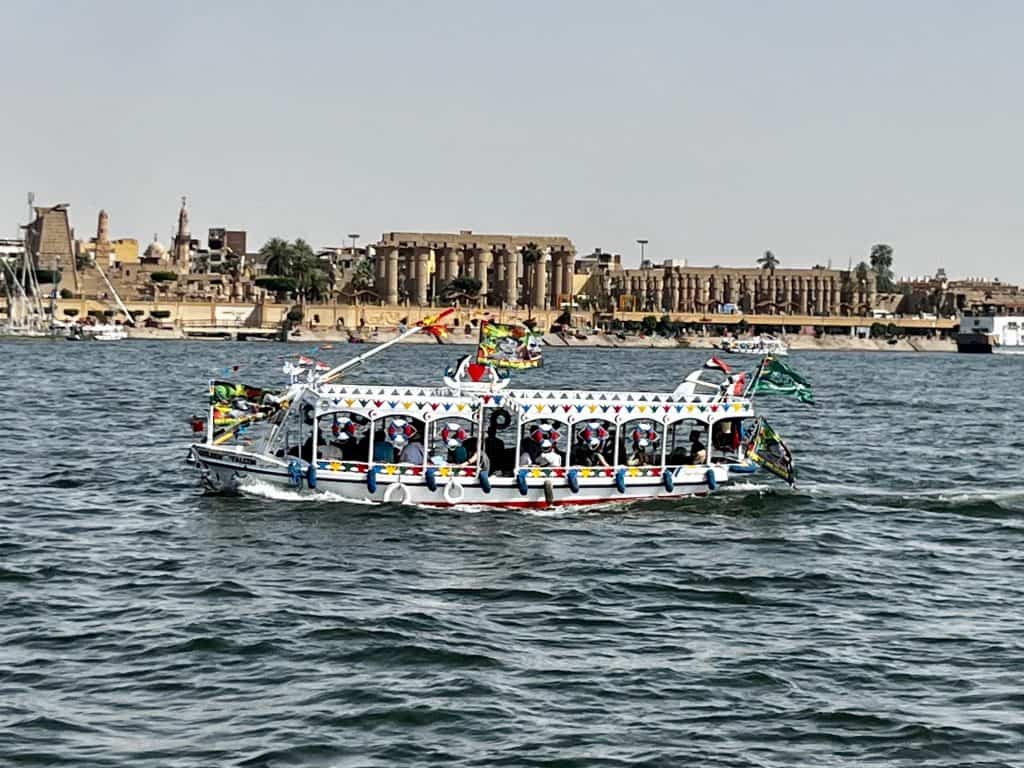
There are also a multitude of colourful taxi boats that will be very willing to transport you across the river privately. For five of us this often ended up costing not much more than the public ferry.
We were staying on the West Bank, at a brilliant budget hotel, Villa Belzoni. This meant the journey to valley of the Kings was only around 15 minutes.
Getting to Valley of the Kings by Taxi
We chose to hire a taxi for the day to take us around many of the West Bank sights. This is a popular way to get around and gives full flexibility of where you go in which order and how long for.
We paid around $20 for the day for our driver, which was well worth it to us. He was recommended by our hotel.
If you want to just go to Valley of the Kings, it is very easy to get a taxi from near the ferry terminal to just take you there. I’m sure you would also be able to arrange a time to be picked up or take your taxi driver’s contact details to contact them when you’re ready to leave.
Most taxi drivers will make arrangements via whatsapp. We had an agreement with our taxi driver that we would message him just before we were ready to be picked up and then he was able to come and pick us up straight from the entrance.
Most phone contracts don’t include data in Egypt so it is worth checking how much you will be charged or getting an e-sim, which will usually work out cheaper.
Taking a Valley of the Kings Tour
An alternative way to visit Valley of the Kings is to take a tour. Most of the tours will combine the West Bank sights into either a half day or full day tour so you are likely to also see Hatshepsut temple and the Colossi of Memnon as well as possibly the Valley of the Queens or Habu temple.
Taking a tour means less hassle regarding organising how to get there and most tours also include a guide that will be able to talk you through the tombs and what you are seeing.
Tours from Luxor
Arranging a tour from Luxor is best done as a private group giving you most flexibility over where you visit and for how long.
This private tour is highly recommended and having an Egyptologist guide would greatly enhance the experience.
Valley of the Kings tours from Hurghada
It’s really easy to arrange a tour of Valley of the Kings from Hurghada. Since it is a longer journey many tours will also include some of the other Luxor highlights such as Karnak temple.
Private tours, again are the best option to give you flexibility around timings but obviously cost a lot more given the larger distances. This full day tour comes highly recommended.
For a more cost-effective option there are lots of group tours to Luxor from Hurghada. It’s a long day but definitely worth it if it’s your only chance to see the amazing ancient sights there.
This small group trip is highly recommended and covers a lot of the top tourist attractions in Luxor.
Which tickets do I need to buy?
Some organised tours will include tickets in the price. If you are travelling independently, tickets can be pre-booked online at the Egyptian monuments website.
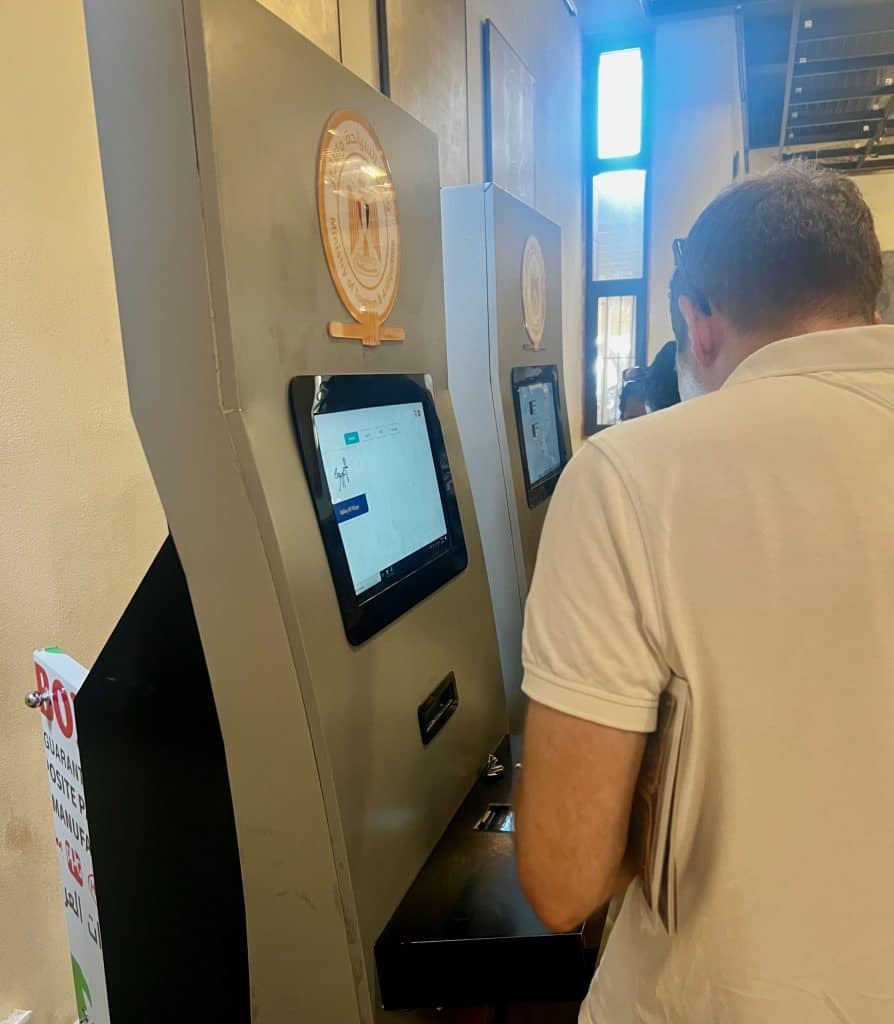
We hadn’t booked ahead and booked using one of the ticket machines at the entrance. There is no difference in price you will pay. Just be aware that it is card only wherever you decide to buy.
The main ticket price at the time of writing is EGP750 per adult, with children half price (under 6s are free). This equates to around $15 US or €13 / £11.
For this ticket you get entry to any three of the main tombs. You don’t need to have decided which tombs you will visit when you book your tickets. Your ticket will be punched each time you enter a tomb to show how many you have been to.
There are four tombs not included in the general admission that will need to be purchased separately if you want to visit them. Tombs which require additional tickets are Tutankhamun, Ramses V / VI, Seti and Aye.
These can be bought at the time of buying your main admission ticket but can also be bought at the entrance of the individual tombs if you are undecided in advance.
We made the decision in advance that we would like to visit Ramses V / VI as well as three from our main ticket and were really happy with this decision as it was our favourite of the four tombs that we saw.
Which are the best tombs in Valley of the Kings?
I did a lot of research before arriving at the tombs to feel prepared regarding which tombs we would like to visit. I was really pleased that I had done that as the sheer volume of tombs is quite overwhelming so it was great to have a clear plan.
I don’t claim to be any great expert and we only visited four tombs so I can only compare those ones. It will depend on the time you have available and your budget as to how many tombs you decide to visit.
We had three children with us so four tombs felt reasonable. They did really enjoy Valley of the Kings though, I think it was their favourite ‘ancient Egypt’ sight in Luxor.
Each tomb has a KV number so it’s useful to be aware of this when trying to locate them on the map of the area.
‘Add on’ tombs
Each of the add on tombs has a different individual price. We only visited one of these but I did do extensive research so can provide a brief overview of our decision process.
Ramases V/ VI tomb (KV9)
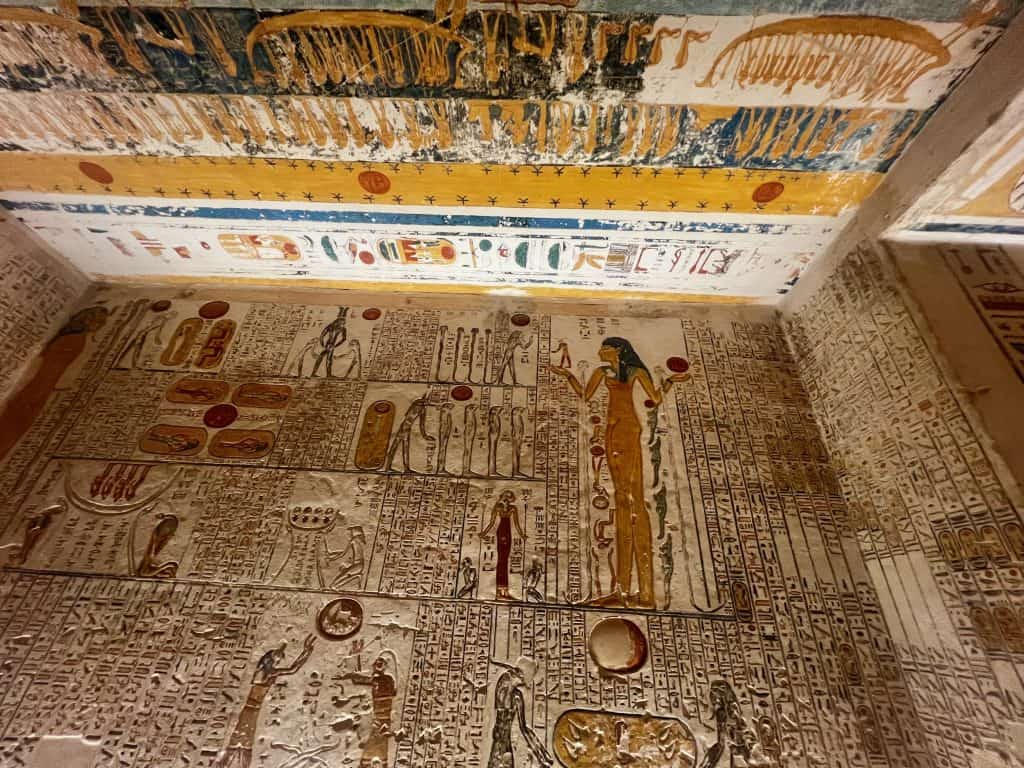
This was the one add-on that we decided to commit to. We were really grateful that we had as it is a brilliant tomb with loads of brightly coloured hieroglyphics. It was also much quieter than most of the other ‘included’ tombs.
Our whole family rated this as the best one that we visited so would definitely recommend if you are considering an extra tomb. At EGP220 extra ($4.50 US) it felt like a reasonable expense and definitely worth it.
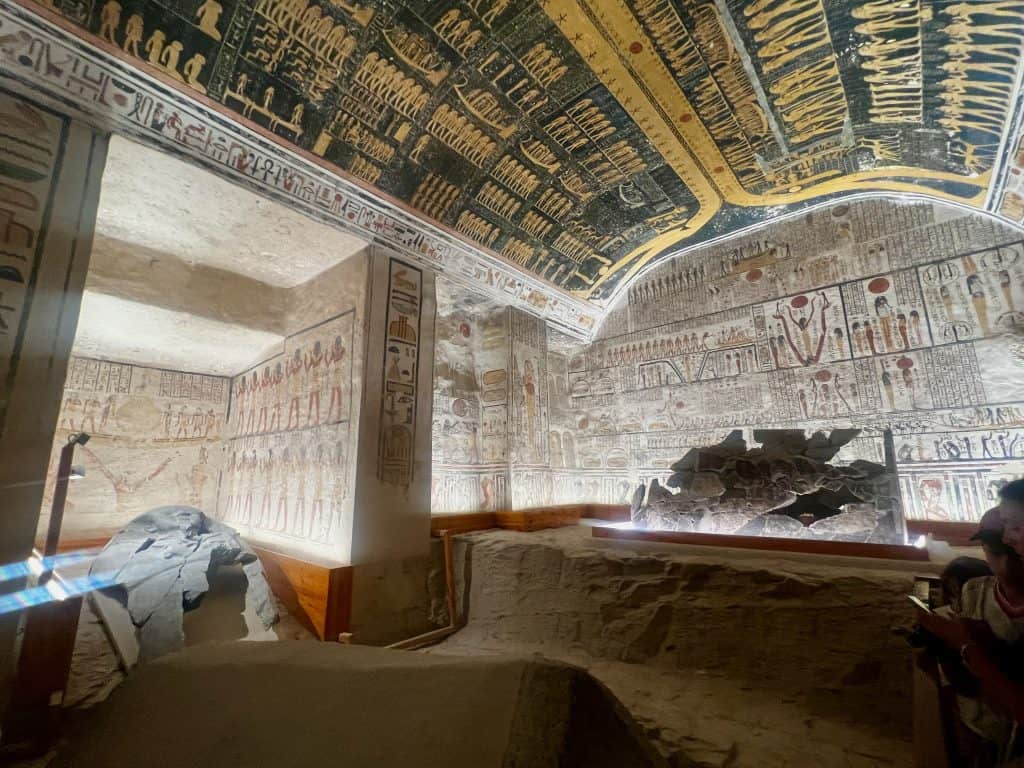
At the end of the long tunnel there is also the remains of a sacophagus, which is really cool. It’s one of the only tombs that belonged to two Pharohoes. Ramses V reign was short so his uncle Ramses VI extended the tomb to make it his own as well.
Tomb of Tutankhamun (KV62)
Being the most famous of all the pharohes this is the tomb that I had assumed I would definitely want to visit. However on reading about it I realised that it is smaller and less decorative than many of the other tombs.
The main draw is that it still houses the mummy of King Tutankhamun himself. There has been talk or removing it to the new Grand Egyptian Museum (GEM) in Giza but this hasn’t happened so far due to a lot of local resistance.
The main reason we didn’t go in this tomb as well was due to the expense. At EGP700 ($14US each) it seemed like a big expense for this budget conscious family, when multiplied by 5 (although children are half price).
Aye Tomb (WV23)
This tomb is inexpensive but is around 2km from the other tombs in a seperate valley. Depending on how you view it this could add to the charm, but also makes it more complicated to visit.
Aye does have much fewer visitors than the other tombs and reportedly you will need to be guided there by the tombs ‘guardian’, which I will admit sounded a bit exciting!
For us, the kids weren’t so bothered about visiting other tombs to make it worth the effort but if you are really enjoying the valley of the kings and have time in your schedule I believe it would be a more unique experience.
Seti I Tomb (KV17)
This is largely regarded as one of the best preserved and most decorative tombs. I would have loved to visit but the price tag was the thing that prevented us. At EGP 2000 ($40 US) per adult we couldn’t justify it.
If you have the budget I have heard it is fantastic though, so definitely include it in your Valley of the Kings itinerary.
Tombs included in main entrance ticket
There are usually around 8-10 standard tombs open at any one time that are included in the standard entrance ticket. This can vary slightly, but you will find a sign displaying which tombs are currently open near the entrance.
After lots of research we settled on the following tombs:
- Ramases IV
- Tausert/ Setnakhert
- Ramses III
We were happy with our choices and each offered something slightly different and would recommend these three as a good combination.
Ramases III (KV 11)
This is famous for being the only tomb with a bend in the tunnel and it is still being excavated. The original dig was abandoned by Sethnakht when they hit the shaft of another tomb.
Ramases III later took over the tombs excavation but had to divert the angle of the tunnel leading to it’s large bend.
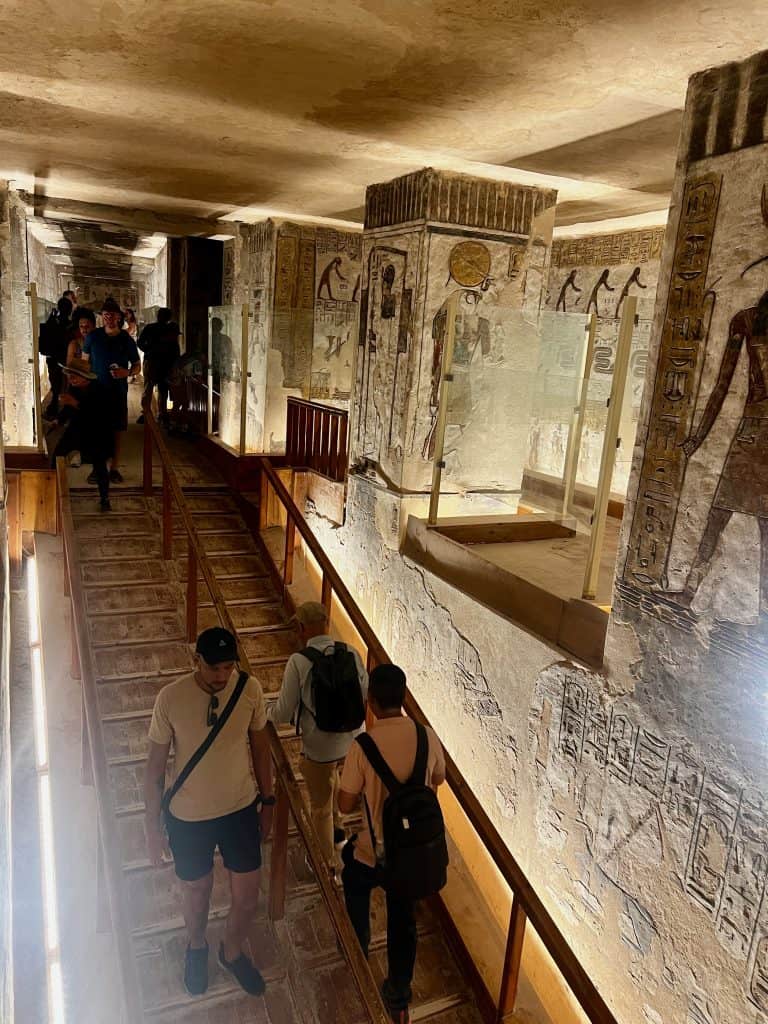
It’s pretty large inside and we found it really interesting. I think due to the bend, it was also the hottest tomb we went into. On the way out it was noticeably cooler once we were past the bend.
Ramases IV (KV2)
This tomb is very close to the Valley of the Kings entrance and was the busiest tomb that we went in.
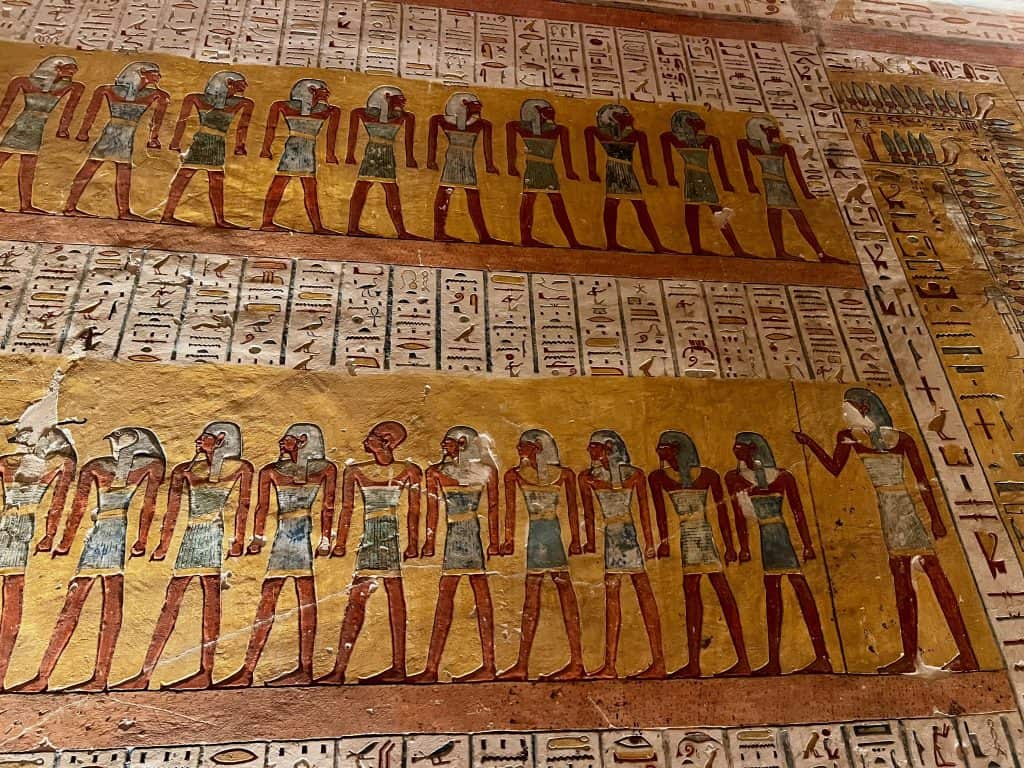
It’s generally busy for a reason though and has a large, impressive burial chamber at the end of the tunnel which is definitely worth seeing.
Tausert / Setnakht (KV14)
Although not the most ornate of the tombs we visited this was probably the one that I enjoyed the most.
It is one of the furthest tombs from the entrance which I really liked for a couple of reasons. Firstly it meant that it was much quieter than the other tombs. Even though we were in Valley of the Kings at a really busy time, we had this tomb to ourselves!
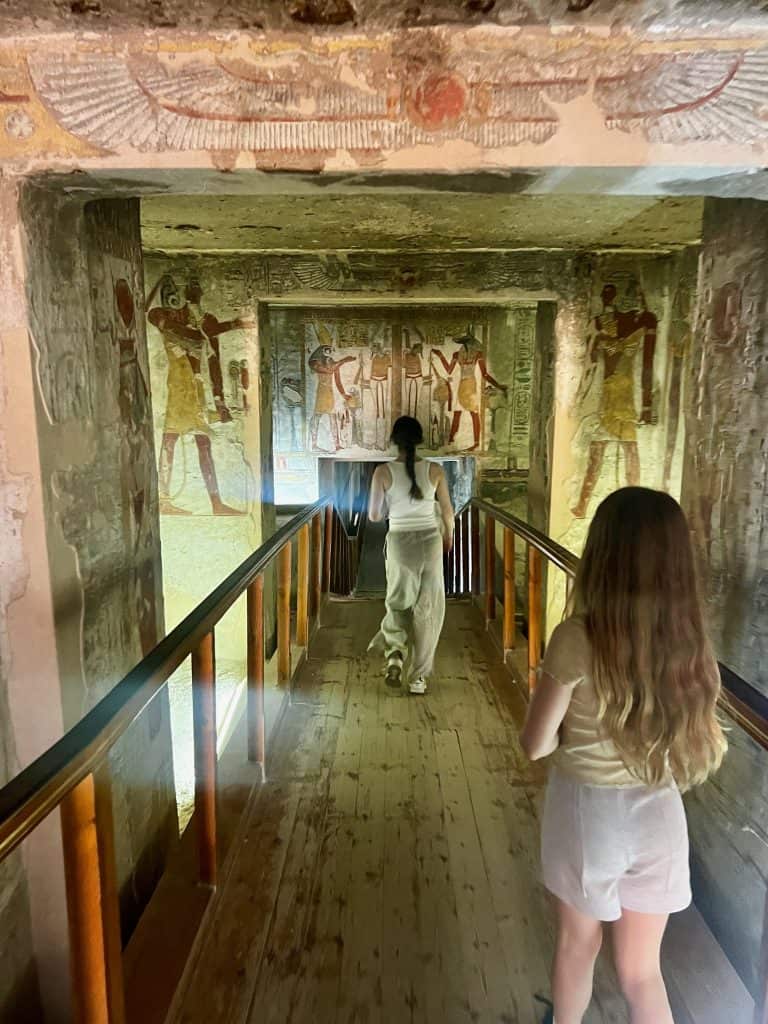
It was also lovely to wander further up the complex to visit this tomb. It’s still not a long way (less than 500m) and you get lovely views up and down the valley from here. It was nice to enjoy the serenity of Valley of the Kings away from the tourist hoardes.
The tomb itself is covered in Hieroglyphics and contains multiple burial chambers.
What to expect on arrival
On arrival at the Valley of the Kings, whether you are being dropped off by taxi or a tour bus you will most likely be dropped off by the main entrance.
Buses and taxis usually then go off to park in the large car park and return to collect you at the end of your visit.
Valley of the Kings Visitor Centre
From the car park, we purchased our tickets from the machine by the entrance, which was pretty easy. There are also ticket booths but when we were there these had much longer queues.
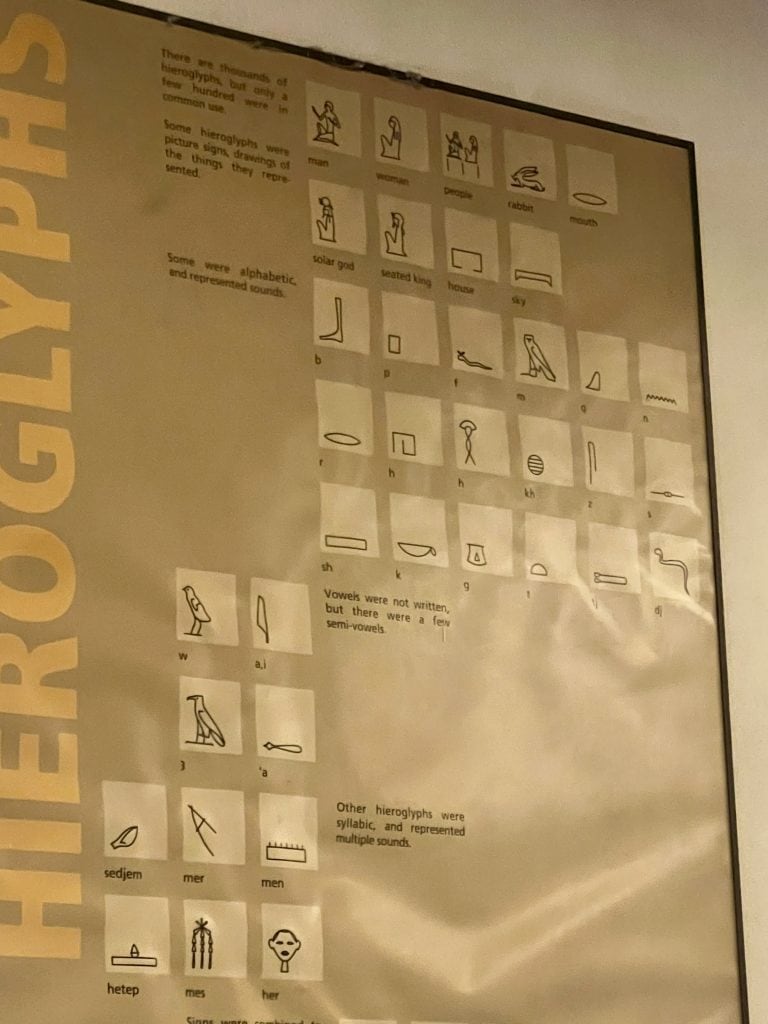
There is an initial visitor centre which contains a large 3D model of the valley and most importantly toilets! There are also toilets once you get to the main site but you’ll need to pay a tip to use those ones.
Getting from the visitor centre to Valley of the Kings entrance
We exited the visitor centre through the opposite doors. From there it is either a 500m walk uphill to the main site or, as most people choose to do, you can take the electric tram up the hill.
Although the walk isn’t really long there is no shade along the way so we were pleased with our decision to take the tram. You can buy tickets for these from a small ticket booth to your right after exiting the visitor centre.
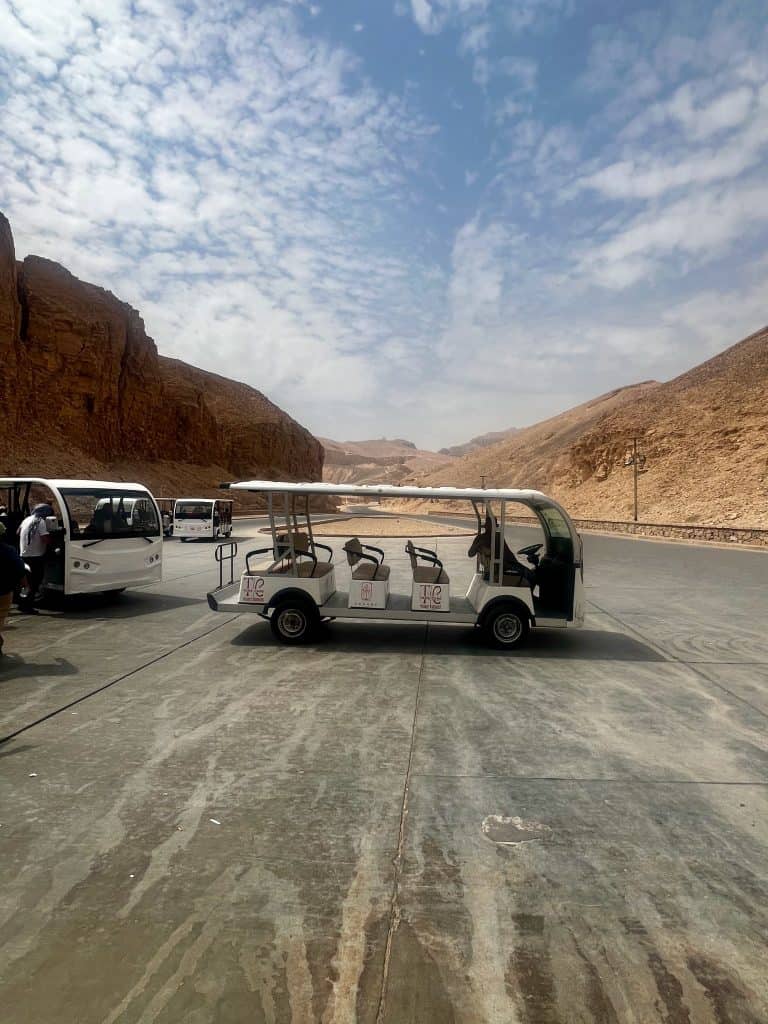
The tram tickets cost EGP20 each (around $0.50) and also covers you for the return journey.
The trams run fairly constantly so there isn’t usually a wait. The trams themselves are open electric trams, which look more like large golf buggies.
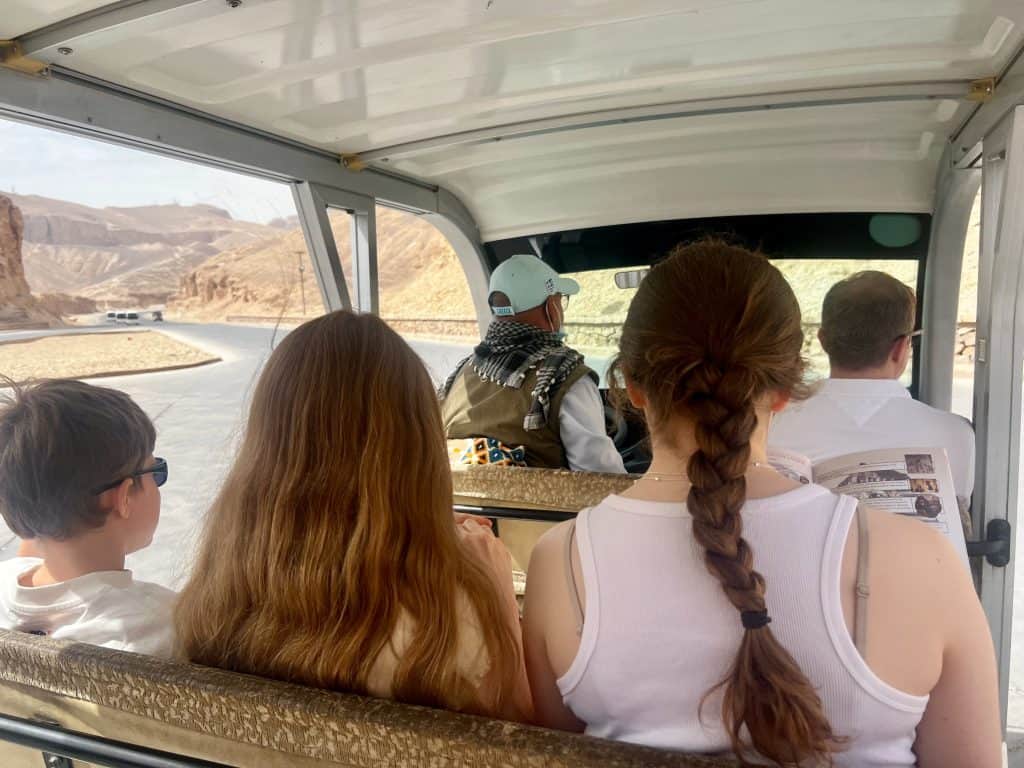
Our driver offered advice on which tombs to visit and drew a crude map on a scrap of paper for us (while he was driving!). Having already done our research he didn’t really give us any new information but obviously then expected a tip for it. My advice would be to politely say no to the offer of advice if you already have a clear idea of where you want to go.
Getting around the Valley of the Kings
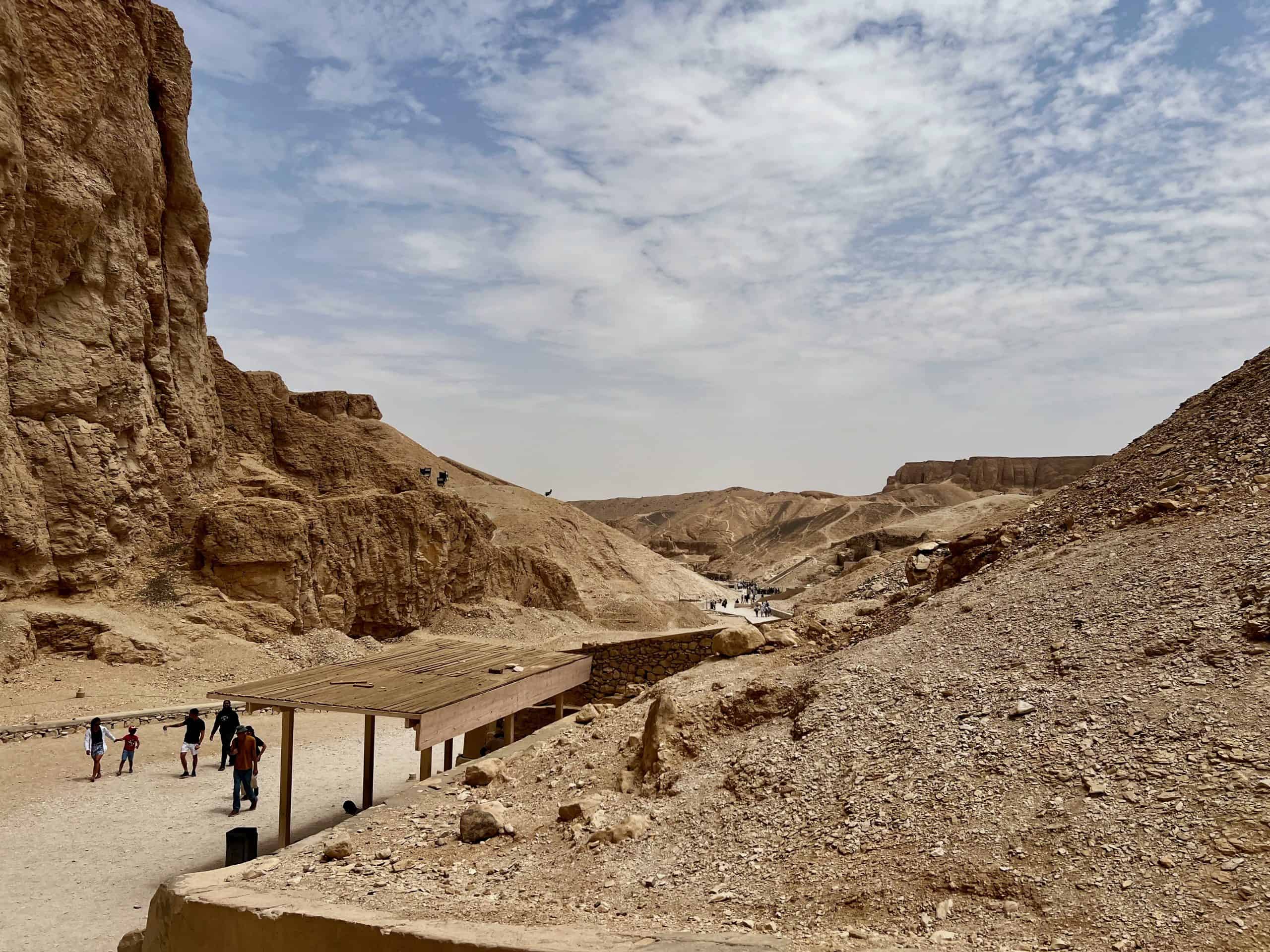
It’s difficult to get lost in Valley of the Kings. The valley is pretty open (it does get very hot and dusty), meaning you can easily see what is around. A single trail winds up the hillside with tombs pealing off on either side before splitting into two trails.
There are information boards with maps showing where all the tombs are so we had a look at these to plan where the tombs were that we wanted to visit.
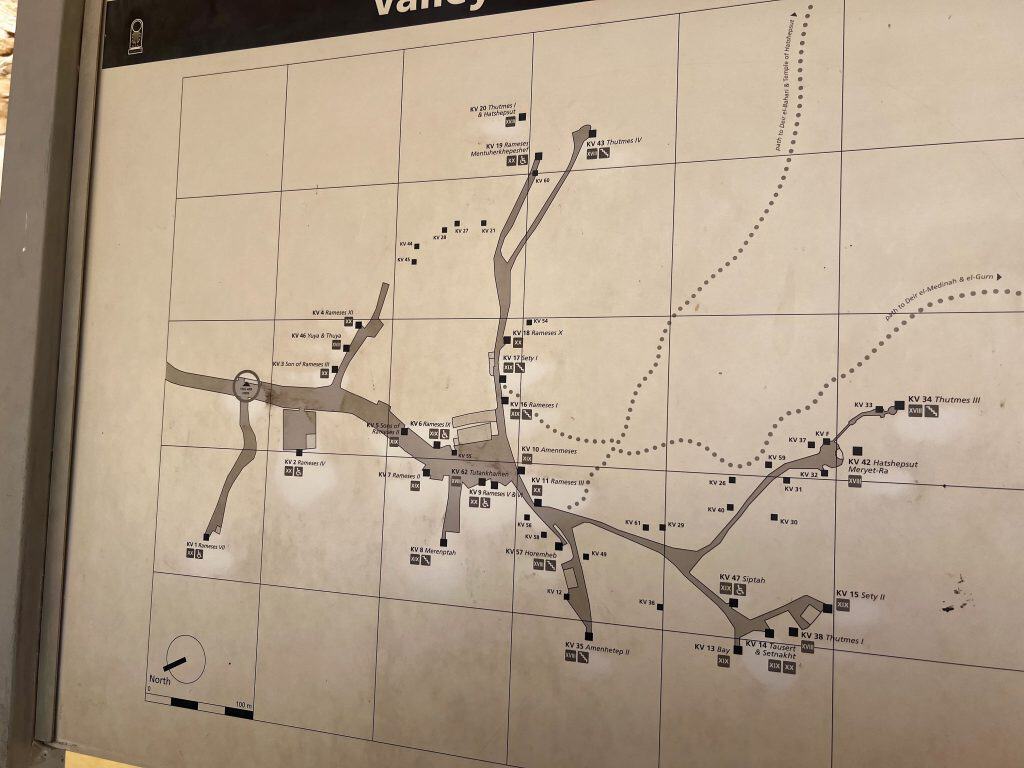
It’s worth making a note of the tomb numbers that you want to visit as they are often signposted using the number rather than the name of the King.
At the entrance to each tomb there is also a sign so you can double check you are at the tomb that you want to be.
Choosing the order of tombs to visit
I don’t think there is any right or wrong order for your tombs visits. We mostly chose depending on the length of queues to get into the tombs!
The tombs closest to the entrance tended to have the longer queues with those further up the valley mostly having no queue at all.
Having said this, we visited KV9 (Ramses V/ VI) first and this was probably our favourite. I would maybe aim to save this until the end if I was to repeat the same tombs again, but it’s not that big a deal.
If visiting early in the morning I would suggest visiting the popular tombs and particularly those closest to the entrance first before they get too busy.
Essential Planning Tips
In my opinion the most important thing to plan before arriving at Valley of the Kings is which tombs you think you would like to visit.
Having said that it’s useful to have thought through other logistics to make your trip smoother and easier.
What time of day should you visit Valley of the Kings?
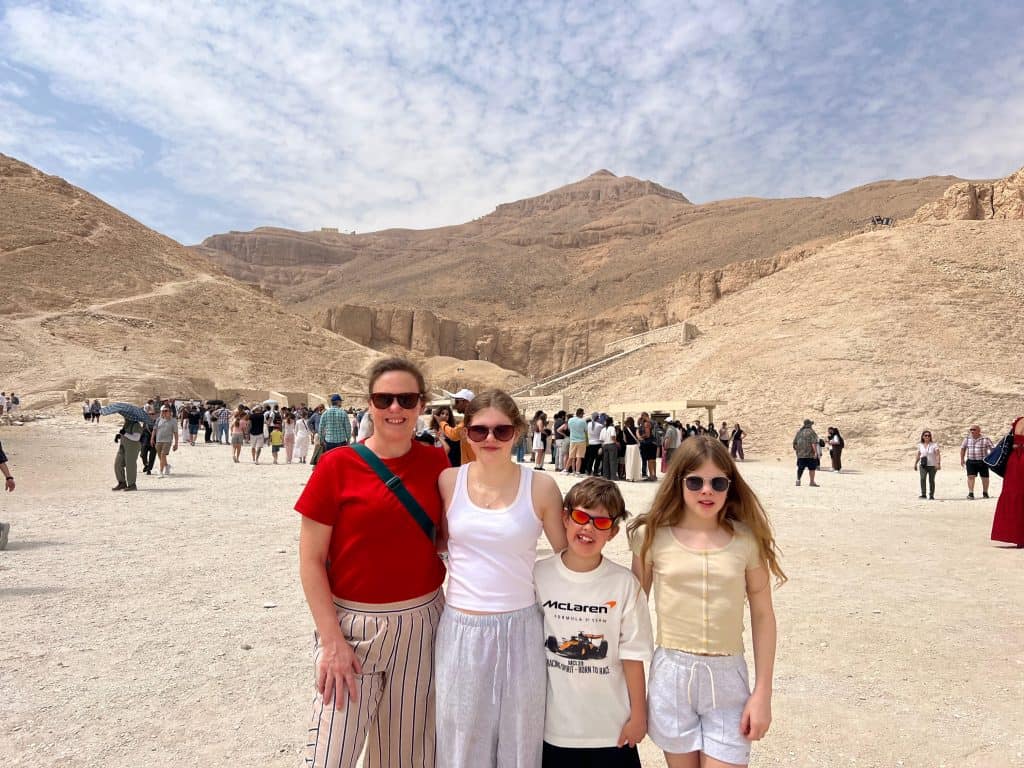
We were picked up from our accommodation at 9a.m. meaning we arrived at Valley of the Kings around 9:30 (after a quick stop off at the colossi of Memnon). Typically for us this meant the place was already swarming with tourists and was pretty busy.
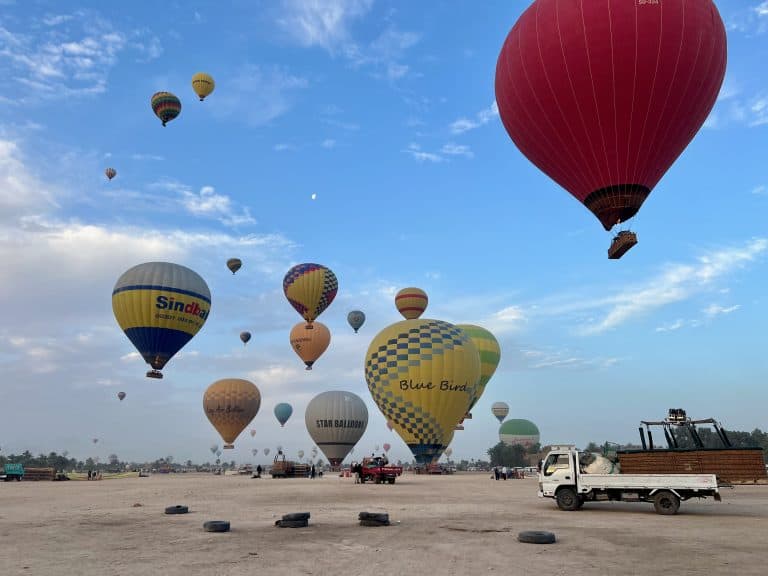
Valley of the Kings opens at 6a.m. so if you can, it is best to arrive for opening time or soon after this. I just can’t get my family to get up for that time (unless it’s for a hot air balloon ride!).
The earlier in the day you go, the fewer crowds and the less intense the heat. We still really enjoyed our visit and even at peak visitor times you can enjoy moments of relative calm, particularly further up the valley.
There were pretty big queues for some of the more popular tombs but this seemed to switch around quite a lot (I think dependent on tour groups), so we largely managed to avoid the longest queues by being flexible in the order of our tomb visits.
Bring snacks and water
There is a cafe close to where you exit the tram to begin the valley of the kings visit. We stopped here for a drink and to cool off a little at one point though and our drinks (particularly by egyptian standards) were very expensive. I think we ate whole meals in Egypt that cost less than five cold drinks did!
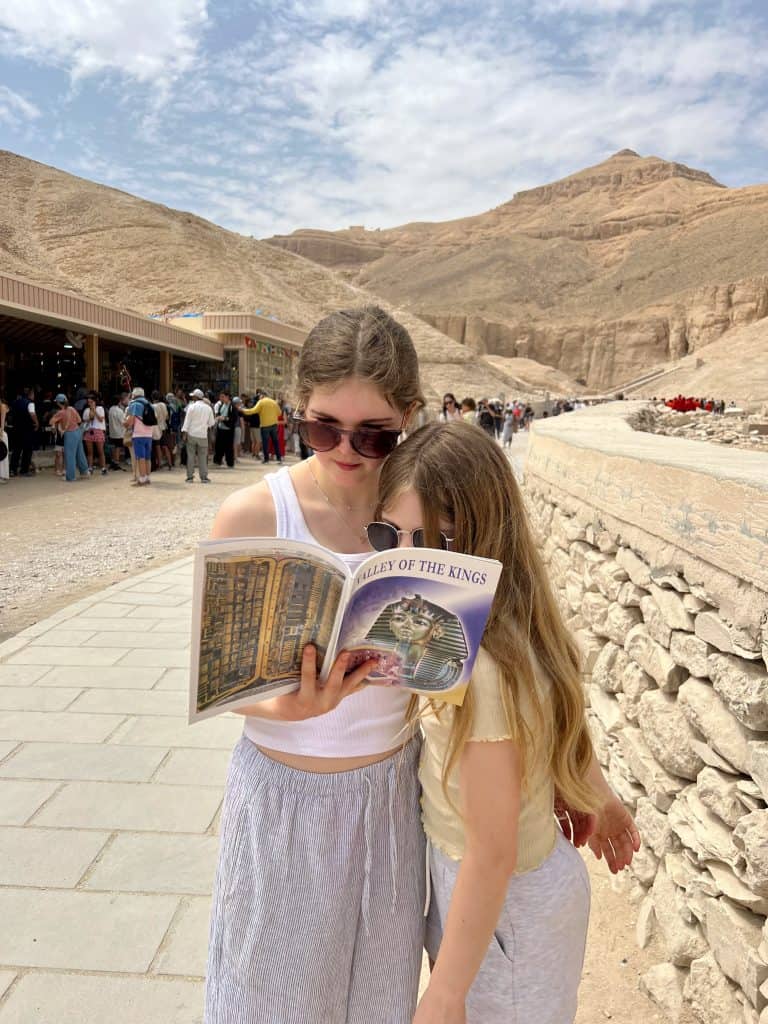
I would totally recommend taking plenty of drinking water with you and particularly if you have kids with you a few snacks to keep everyone happy always goes down well.
Our taxi driver took us to Paris Restaurant, near the Collosi of Memnon, which was a great restaurant if you are looking for somewhere for lunch after your visit (and much more reasonable than anything for sale in the on-site cafe.
Have some small change for the toilets
There are toilets at the visitor centre which are free. Once you alight the tram at the main site there are also toilets but as with many toilets in Egypt you are expected to pay a small fee to use these.
As a general rule, wherever you are in Egypt it’s always useful to have some small change with you. You never know when you will be expected to pay for toilets or someone will want some baksheesh for giving you some advice.
Once you leave the entrance to the valley there aren’t any other toilets, so it’s worth going here before walking up (particularly to the furthest tombs).
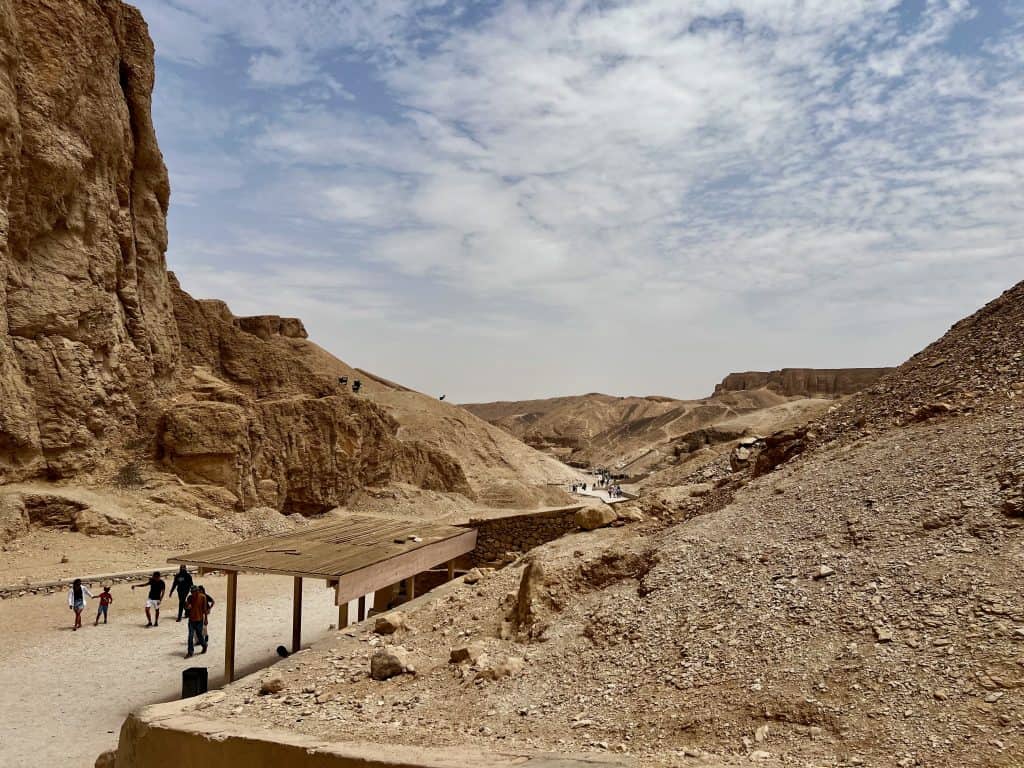
Despite visiting at peak times and it being pretty hot we all really loved Valley of the Kings. The kids all really enjoyed it too and is a great way for them to learn a bit of history in the real world.
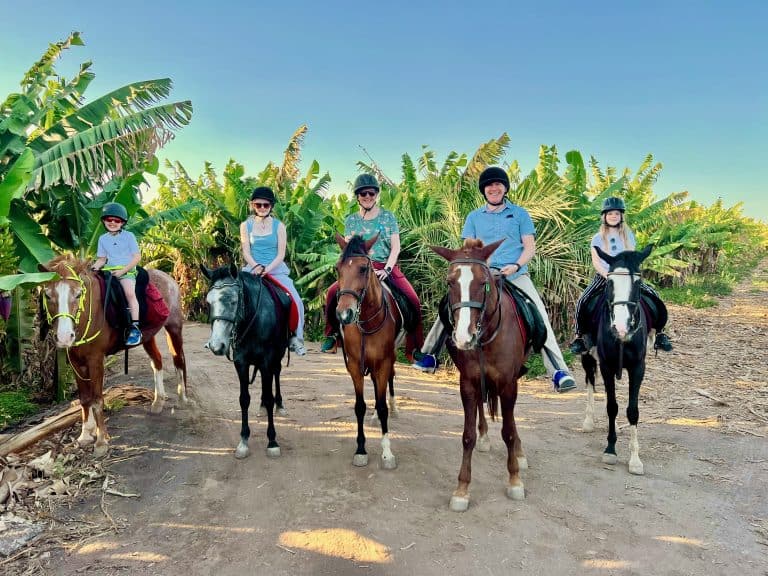
We’ve got lots of other ideas of things to do in Luxor in other posts on the blog. Some of our favourites were horseriding on the West Bank, taking a sunset felucca ride on the Nile and seeing the incredible Karnak temple.
Our Egypt itinerary combined Luxor with some relaxation by the red sea at hotel Jaz Makadina in Makadi Bay near Hurghada.
What is Valley of the Kings?
Valley of the Kings is an ancient burial site for the Egyptian Pharaohs in Luxor, Egypt. It’s a UNESCO world heritage site.
How long does it take to visit Valley of the kings?
We spent around 2 hours in Valley of the Kings. 2-3 hours should be plenty for a visit depending on how many tombs you want to see.
When is the best time of year to visit Valley of the Kings?
Being in the desert and sheltered in a valley it gets really hot here. Because of this the best time to visit is in the cooler months from November to March.